

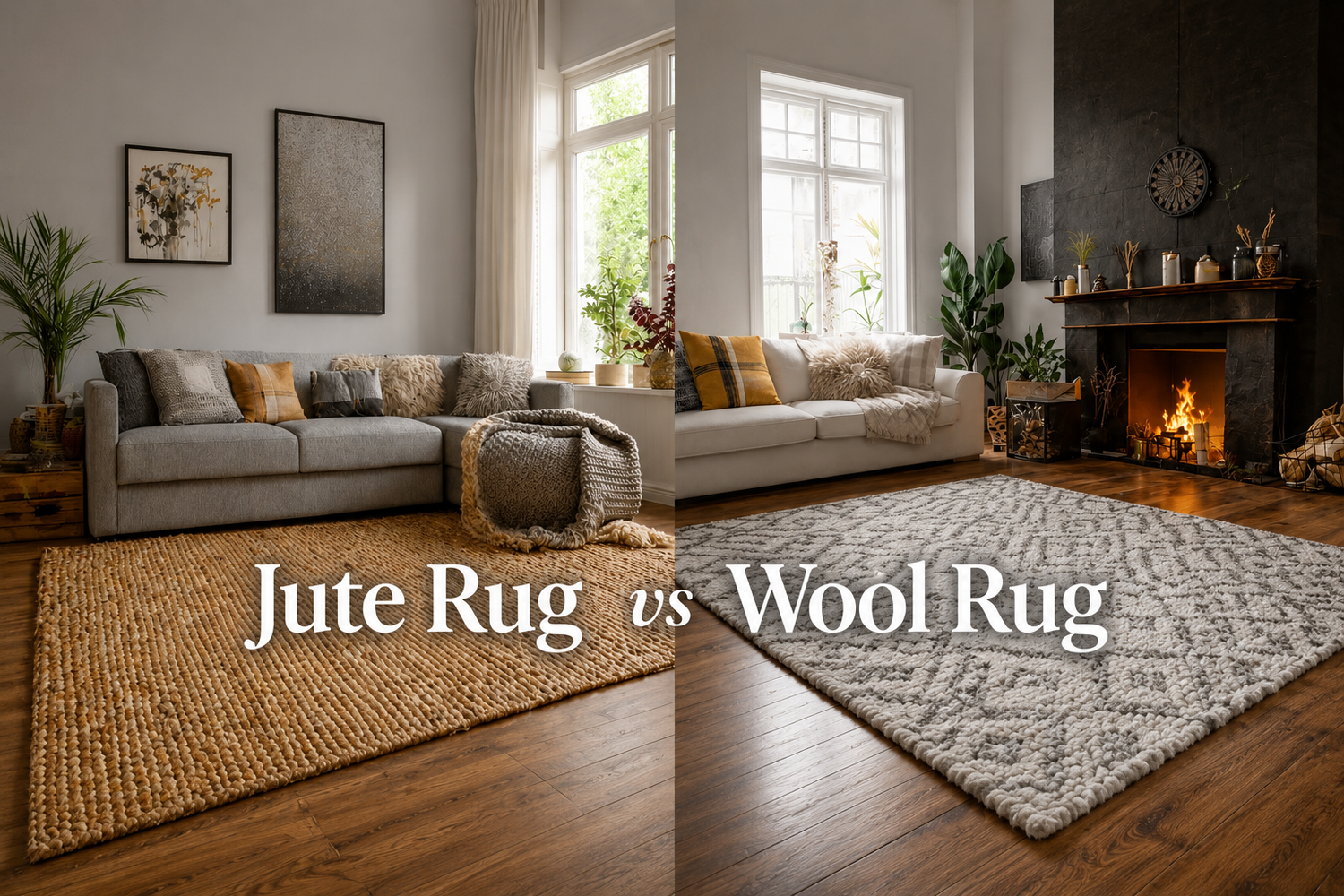
Wool vs Jute vs Cotton Rugs: Which Material Is Right for Your Home?
The material your rug is made from determines almost everything: how it feels underfoot, how long it lasts, how easy it is to clean, and how it responds to humidity, sunlight, and traffic. Yet material is the detail most people ignore when shopping for rugs online.
Beyond Rugs works primarily with three natural fibres: wool, jute, and cotton. Each has a distinct character, a distinct set of strengths, and a specific range of rooms where it excels. Here's everything you need to know to choose correctly.
Quick Comparison
|
Property |
Wool |
Jute |
Cotton |
|
Feel underfoot |
Soft, plush, warm |
Coarse, natural, textured |
Smooth to soft |
|
Durability |
Excellent (20+ years) |
Good (moderate traffic) |
Moderate (3–8 years) |
|
Moisture resistance |
Good (natural lanolin) |
Poor (absorbs moisture) |
Moderate |
|
Eco-friendliness |
Excellent |
Exceptional |
Good (if organic) |
|
Maintenance |
Moderate (no harsh chemicals) |
Low |
Easy (washable options) |
|
Price range |
Mid to high |
Budget to mid |
Budget to mid |
|
Best rooms |
Living room, bedroom |
Living room, hallway |
Bedroom, kids' room |
|
Pile type |
Pile or flatweave |
Flatweave only |
Pile or flatweave |

Wool Rugs — The Gold Standard
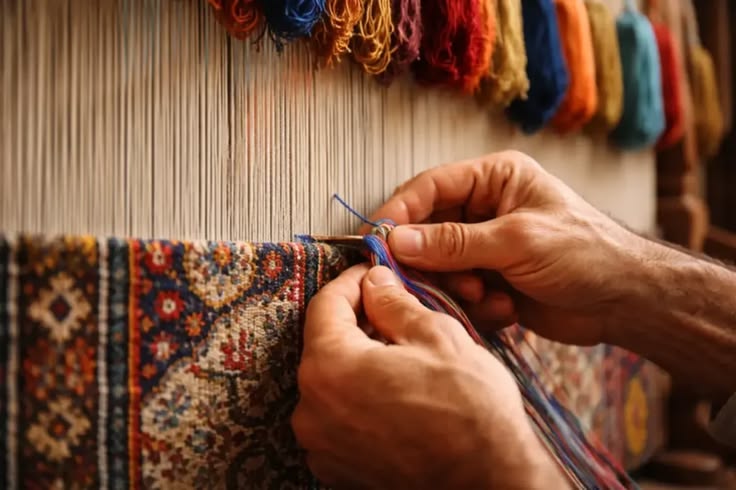
Wool has been used for handmade rugs for thousands of years — and for good reason. It's naturally resilient, surprisingly easy to maintain, and develops a patina over time that only improves with age. Our wool rug collection is hand-tufted by artisans in India using premium wool selected for both softness and durability.
What makes wool exceptional
- Natural lanolin coating repels water and stains at the fibre level — spills bead up rather than soaking in immediately
- Naturally antimicrobial — wool does not support the growth of bacteria or dust mites in the same way synthetic fibres do
- Self-extinguishing when exposed to flame — wool chars rather than melts or burns freely, making it the safest rug material for homes with fireplaces
- Holds dye exceptionally well — wool rugs maintain their colour depth for decades without fading
- Resilient pile — wool springs back from compression, making it resistant to furniture indentations
Wool rug limitations
- Shedding in the first months — normal with new hand-tufted wool rugs; vacuum regularly and it stops within 3–6 months
- Avoid harsh chemical cleaners — wool requires pH-neutral cleaning agents; bleach and strong solvents damage the fibre
- Not suitable for very humid environments — bathrooms and basements are not ideal for wool rugs
Who should choose wool: Anyone prioritising longevity, comfort, and quality. Wool rugs are an investment — they last 20+ years with basic care and often outlast the furniture around them.
 Jute Rugs — The Eco Champion
Jute is a plant fibre harvested from the Corchorus plant, grown predominantly in India and Bangladesh. It requires minimal water, no pesticides, and is fully biodegradable. Our jute rug collection is flatweave-constructed — tightly woven for durability and a clean, textural look.
What makes jute exceptional
- The most eco-friendly natural fibre available for rugs — lower carbon footprint than wool, cotton, or any synthetic
- Naturally golden-tan in colour — requires no dyeing for its base tone, which further reduces environmental impact
- Strong tensile strength — jute fibres are surprisingly tough for their weight, making flatweave jute rugs durable under moderate foot traffic
- Excellent layering base — a neutral jute rug works beautifully as a base layer under a statement pile rug
- Budget-accessible — jute rugs cost less than wool due to lower raw material costs
Jute rug limitations
- Poor moisture resistance — jute absorbs water readily and can develop mould in damp conditions; not suitable for bathrooms, laundry rooms, or outdoor spaces
- Rough texture — flatweave jute can feel coarse underfoot; not recommended for barefoot high-use areas like bedrooms
- Limited colour range — jute's natural colour is golden-brown; deep saturated colours don't achieve the same vibrancy as wool or cotton
- Not suitable for homes with very young children who spend a lot of time on the floor
Who should choose jute: Eco-conscious buyers who want a natural, neutral-toned rug for a living room, hallway, or layering base. Jute rugs are excellent in high-style, low-barefoot-traffic spaces.

Cotton Rugs — The Practical Choice
Cotton rugs occupy the practical middle ground: softer than jute, more affordable than wool, and — crucially — more washable than either. Our washable rug collection includes cotton-blend options that can be machine washed, making them the obvious choice for high-mess environments.
What makes cotton exceptional
- Washable — many cotton and cotton-blend rugs can be machine washed at home, which wool and jute cannot
- Soft texture — cotton pile rugs are gentle on skin, making them excellent for kids' rooms and play areas
- Wide colour range — cotton takes dye well in a full spectrum, including bright, saturated colours that pop in children's rooms
- Hypoallergenic — cotton is non-irritating and a safe choice for households with skin sensitivities
- Affordable — cotton rugs are generally the most accessible natural fibre option by price
Cotton rug limitations
- Lower durability — cotton fibres flatten more quickly under foot traffic than wool; expect a 3–8 year lifespan in high-use areas
- Prone to shrinkage — cotton rugs can shrink if washed in water that's too hot; always follow care label instructions=
- Less resilient pile — once flattened, cotton pile doesn't bounce back as effectively as wool
Who should choose cotton: Families with young children, pet owners, and anyone who needs a rug they can actually wash. Cotton rugs are the pragmatic choice — not the luxury choice, but the right choice for messy, busy, living-in-it households.
Room-by-Room Material Guide
|
Room |
Best Material |
Why |
|
Living room |
Wool |
Durability, comfort, longevity — this is the highest-use room |
|
Master bedroom |
Wool |
Softness underfoot in the morning; low traffic protects the investment |
|
Kids' room |
Cotton |
Washable, soft, colourful — designed for life on the floor |
|
Dining room |
Jute or cotton |
Spill risk means pile rugs aren't ideal; flatweave is easier to clean |
|
Hallway |
Jute |
Heavy traffic needs durability; jute flatweave handles it well |
|
Home office |
Wool or jute |
Low moisture, moderate traffic; either works depending on budget |
|
Bathroom |
Cotton only |
Wool and jute cannot tolerate bathroom moisture levels |
|
Outdoor spaces |
Synthetic only |
No natural fibre performs reliably outdoors |

FAQ — Rug Materials
Q: Which rug material is most durable? |
|
A: Wool is the most durable natural rug material. A well-made hand-tufted wool rug can last 20–30 years with basic care. Jute is durable under moderate traffic but degrades faster in humid conditions. Cotton is the least durable but the most washable. |
Q: Is jute or wool better for a living room? |
|
A: Wool, in most cases. Wool handles the combination of regular foot traffic, occasional spills, and furniture weight better than jute. Jute flatweave is an excellent living room choice if you prefer a more textural, natural aesthetic and are prepared to layer it with a smaller pile rug. |
Q: Are natural fibre rugs eco-friendly? |
|
A: All three — wool, jute, and cotton — are natural, renewable fibres that biodegrade at end of life. Jute has the lowest environmental footprint overall (minimal water and no pesticides required). Organic cotton is the most eco-friendly cotton option. Wool's environmental impact depends on farming practices. |
Q: Can I use a wool rug in a home with pets? |
|
A: Yes, with caveats. Wool's lanolin naturally repels some pet-related stains. However, pet urine requires immediate treatment — if it soaks through to the backing and dries, it's very difficult to remove and can cause permanent damage. A washable cotton-blend rug may be more practical if accidents are frequent. |


Leave a comment
This site is protected by hCaptcha and the hCaptcha Privacy Policy and Terms of Service apply.