

Hand-Tufted vs Hand-Knotted vs Flatweave Rugs: What's the Actual Difference?
When you're shopping for an area rug online, the listing will almost always mention how the rug is made: hand-tufted, hand-knotted, flatweave, machine-made, power-loomed. These terms sound similar but describe fundamentally different construction methods — and the method determines the rug's texture, durability, price, and lifespan.
At Beyond Rugs, we specialize in hand-tufted and flatweave construction — both made entirely by hand by skilled artisans in India. Here's what every rug technique actually means, and how to choose the right one.

Hand-Tufted Rugs
How they're made
A hand-tufted rug is made using a handheld tufting gun — a device that pushes loops of yarn through a stretched canvas backing. The artisan guides the gun by hand, row by row, following a pattern drawn onto the canvas. Once the tufting is complete, the loops are either left intact (loop pile) or cut to create a plush surface (cut pile). A latex adhesive is applied to the back to hold the tufts in place, and a scrim backing fabric is glued on top for stability.
Finally, the rug is trimmed and sculpted — an artisan uses scissors or an electric carver to define pattern edges, create texture variations, and finish the pile at an even height.
What hand-tufted rugs feel and look like
Hand-tufted rugs are soft, plush, and warm underfoot. The cut-pile surface creates a uniform, luxurious feel that most people associate with 'premium' rugs. Patterns can be intricate, and because each rug is guided by hand, no two are exactly identical — there's genuine character in the slight variations.
Hand-tufted rug considerations
- Shedding: New hand-tufted wool rugs shed for the first 3–6 months. This is normal — loose fibres from the tufting process working their way out. Vacuum regularly on low suction and it stops.
- Backing lifespan:The latex backing eventually degrades (typically after 15–25 years). This is earlier than hand-knotted rugs, but hand-tufted rugs cost a fraction of the price.
- Not suitable for outdoor use: Moisture compromises the latex adhesive.
Best for: Living rooms, bedrooms, kids' rooms, and any space where softness and visual impact matter more than extreme longevity. The right choice for 90% of home décor applications.
Browse our hand-tufted collection →

Hand-Knotted Rugs
How they're made
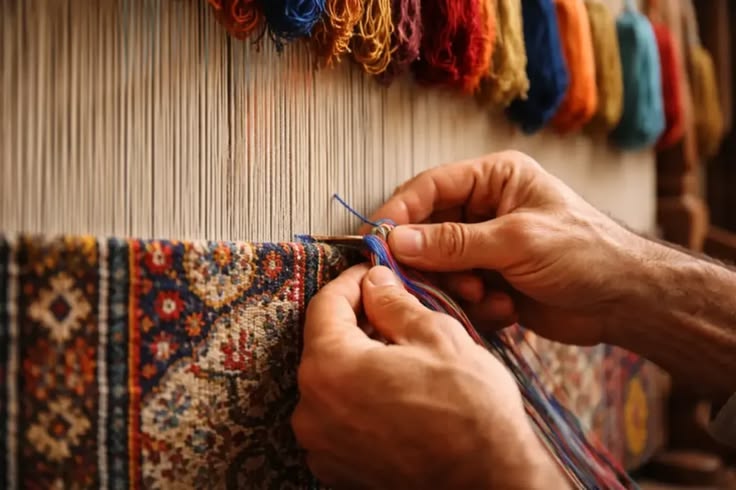
Hand-knotted rugs are made on a loom, with each individual knot tied by hand around the warp threads. A skilled weaver ties thousands — sometimes millions — of knots per rug, working row by row from the bottom of the loom to the top. Once complete, the warp threads are cut to form the pile and the rug is washed, stretched, and finished.
A 9×12 ft hand-knotted rug with a medium knot density can take 6–18 months to complete. This is why they cost significantly more.
What hand-knotted rugs feel and look like
Hand-knotted rugs are extraordinarily durable — they can last 50–100 years, often appreciating in value over time. The pile is held entirely by the knots themselves (no adhesive), so they can be professionally repaired and re-knotted if damaged. Antique and vintage hand-knotted rugs are collector's items.
Hand-knotted rug considerations
- Price: Significantly higher than hand-tufted — a quality hand-knotted rug typically starts at $500 and often exceeds $2,000 for larger sizes.
- Weight: Dense and heavy — large hand-knotted rugs require two people to move.
- Long production time: Not available for fast turnaround; custom hand-knotted rugs take months.
Best for: Long-term investments, formal dining rooms, heirloom-quality pieces. If you're furnishing a room you intend to keep for 30+ years and want a rug that outlasts everything else in it, hand-knotted is the choice.
|
Note: Beyond Rugs specialises in hand-tufted and flatweave construction. We don't sell hand-knotted rugs — we include them here so you can make a fully informed comparison. For hand-knotted pieces, look to specialist dealers. |

Flatweave Rugs
How they're made
Flatweave rugs (also called flat-woven or kilim-style rugs) are woven on a loom without any pile. Warp and weft threads interlace to create a flat, reversible surface — there's no looped or cut pile involved. The pattern comes from the weaving itself, not from carving or sculpting.
Our flatweave collection is made using jute, cotton, and blended yarns woven by hand in India.
What flatweave rugs feel and look like
Flatweave rugs are thin, light, and reversible — a practical advantage for keeping them looking fresh (flip them occasionally to even out wear). They have a clean, textural surface that ranges from slightly rough (jute flatweave) to smooth (cotton flatweave). They lie very flat on the floor, which makes them ideal under rolling desk chairs and in high-traffic corridors.
Flatweave rug considerations
- No pile to lose: Flatweave rugs don't shed, don't flatten, and don't show traffic patterns the way pile rugs do.
- Underfoot feel: Not as soft or cushioned as pile rugs — less comfortable in bedroom applications.
- Rug pad essential: Flatweave rugs move on hard floors without a non-slip pad underneath.
- Reversible: Most flatweave rugs can be flipped to extend usable life significantly.
Best for: Dining rooms, kitchens, hallways, home offices, and as base layers under smaller statement rugs. Excellent for dog owners — hair doesn't embed in flatweave the way it does in pile.

Side-by-Side Comparison
|
Factor |
Hand-Tufted |
Hand-Knotted |
Flatweave |
|
Construction |
Tufting gun + latex |
Knotted on loom |
Woven on loom (no pile) |
|
Feel |
Plush, soft |
Dense, firm |
Flat, textural |
|
Lifespan |
15–25 years |
50–100 years |
10–20 years |
|
Shedding |
Yes (first 6 months) |
Minimal |
None |
|
Reversible |
No |
No |
Yes |
|
Washable |
No |
No |
Some (cotton flatweave) |
|
Price (8×10 ft) |
$150–$600 |
$500–$3,000+ |
$80–$350 |
|
Best rooms |
Living room, bedroom |
Formal spaces |
Dining, hallway, office |

FAQ — Rug Construction
Q: Is hand-tufted the same as handmade? |
|
A: Hand-tufted rugs are genuinely handmade — a skilled artisan guides the tufting gun and does all the pattern work by hand. However, 'handmade' can also refer to hand-knotted and hand-woven rugs. Hand-tufted is a specific technique, not a catch-all term. |
Q: Which is better: hand-tufted or hand-knotted? |
|
A: It depends on your priorities. Hand-knotted rugs are more durable and valuable long-term. Hand-tufted rugs are more affordable, softer, and available in a wider range of contemporary designs. For most homeowners, hand-tufted offers the best balance of quality and value. |
Q: Why do hand-tufted rugs shed? |
|
A: Shedding happens because the tufting process leaves some loose fibres in the pile that aren't fully anchored. These work their way out naturally with vacuuming over the first few months. It's not a quality defect — it stops on its own. |
Q: Can I use a flatweave rug in a bedroom? |
|
A: You can, but it won't feel as soft underfoot as a pile rug. For bedrooms, we generally recommend a flatweave only if you're layering it under a softer rug, using it in a walk-in wardrobe, or prefer a very minimal, Japandi-style bedroom aesthetic. |


Leave a comment
This site is protected by hCaptcha and the hCaptcha Privacy Policy and Terms of Service apply.