

A well-made handmade wool rug is one of the most durable things you can put in your home. Our customers regularly tell us their wool rugs look better after five years than they did in year one — the pile softens, the colours develop depth, and the whole piece settles into the room.
But that longevity isn't automatic. It requires a few consistent habits and the knowledge of what not to do. This guide covers everything — from day-one setup to long-term professional care.
Day One: Getting Started Right
Use a rug pad
A non-slip rug pad is the single most important accessory for any rug, but especially for wool. It prevents the rug from moving on hard floors (which causes edge wear), lifts the rug slightly for airflow, and cushions the pile from compression. Choose a felt-and-rubber pad for hard floors; rubber mesh for carpet-on-carpet.
Allow the rug to relax
New handmade rugs sometimes arrive with slight creases from packaging. Lay the rug flat and allow 24–48 hours for it to fully relax. Never fold a wool rug to store it — rolling is the correct method if you need to store it.
Understand early shedding
If you've purchased a hand-tufted wool rug, you'll notice shedding in the first weeks — loose fibres appearing after vacuuming. This is completely normal and not a quality defect. It's loose fibres from the tufting process working their way out naturally. It stops on its own, typically within 3–6 months with regular vacuuming.
Vacuuming: The Most Important Routine
Regular vacuuming is the single best thing you can do for a wool rug. Dirt and grit that settles into the pile acts like sandpaper — every footstep grinds it against the fibres. Remove it before it accumulates.

Vacuuming rules for wool rugs
- Frequency: Once a week in low-traffic rooms; two to three times per week in high-traffic areas or homes with pets.
- Suction level: Use low to medium suction. High suction on wool pile can pull fibres loose.
- Beater bar: Turn off the beater bar (rotating brush) if your vacuum has one. The beater bar is aggressive on wool pile and accelerates wear. Use suction-only mode.
- Direction: Vacuum with the pile direction (you'll feel the rug is smoother in one direction than the other). Going against the grain occasionally to dislodge deep dirt is fine, but finish with the grain.
- Edges: Don't vacuum directly over the rug's fringe or edging — wrap it under or move carefully around it.
- Edges: Don't vacuum directly over the rug's fringe or edging — wrap it under or move carefully around it.
Rotation: The Habit Most People Skip
Rotate your rug 180 degrees every 6 months. This is the simplest, most effective way to prevent uneven wear — the portion of the rug that gets the most foot traffic alternates, so no single area compresses permanently.
If your rug is in a particularly sunny room, rotation also prevents one side from fading disproportionately.

Dealing with Spills
|
The golden rule: blot immediately, never rub. Rubbing a spill pushes the liquid deeper into the pile and spreads the stain. Blotting lifts it out. |
Step-by-step spill response
- Remove any solid material immediately using a spoon or blunt knife — scoop outward from the centre to avoid spreading.
- Blot the liquid with a clean white cloth, pressing firmly and lifting straight up. White cloth is important — coloured cloths can transfer dye to the wet rug.
- Mix one teaspoon of pH-neutral dish soap with one cup of cold water. Apply sparingly to the stained area with a clean cloth.
- Blot again from the outside edge of the stain inward. Repeat until the stain lifts.
- Rinse with a small amount of cold water on a clean cloth to remove soap residue.
- Press dry towels firmly onto the wet area and weigh them down for 20–30 minutes to absorb as much moisture as possible.
- Allow to air dry completely — never use heat (a hair dryer accelerates drying but can set remaining stain and shrink wool fibres).

What not to use on wool
- Bleach or chlorine-based cleaners — permanently damages wool fibre
- Alkaline detergents — strips lanolin and causes fibre damage
- Hot water — can felt (shrink and mat) wool fibres
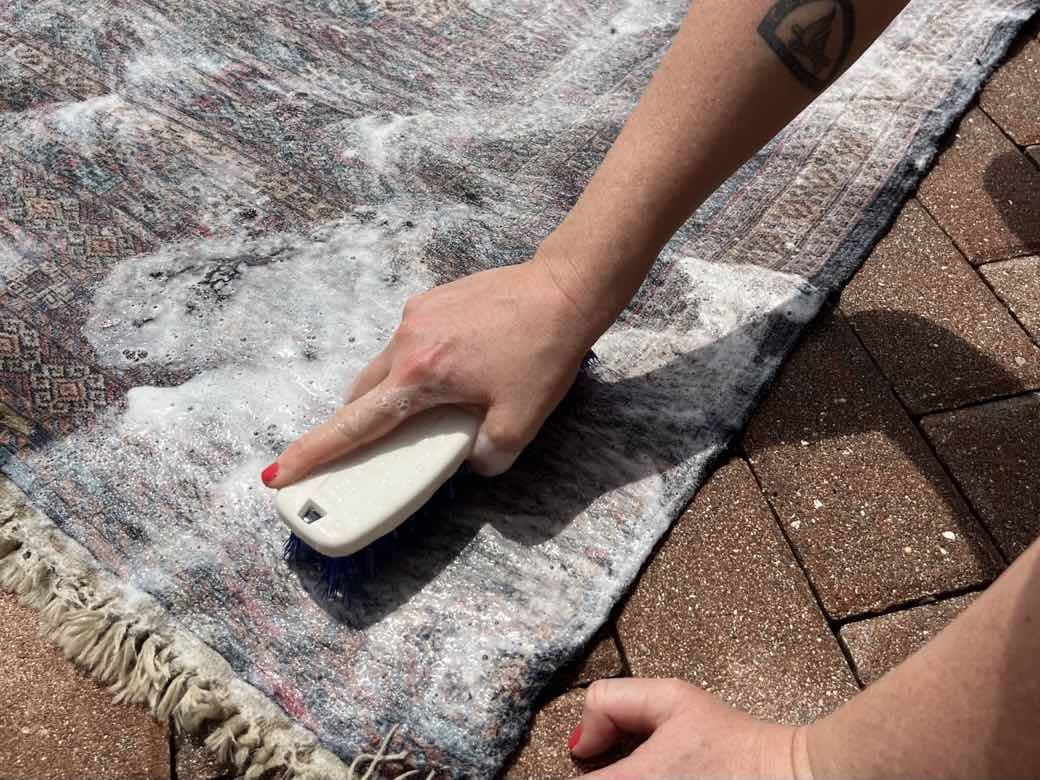
- Vigorous scrubbing — breaks down pile structure
Professional Cleaning: When and How Often
Even with diligent home care, a wool rug accumulates deep-seated dirt and oils that home vacuuming cannot fully remove. Professional cleaning restores the pile's brightness and removes what builds up invisibly over time.
Recommended schedule
- Low-traffic rooms (formal dining room, guest bedroom): every 3–5 years
- Standard living areas (main living room, master bedroom): every 1–2 years
- High-traffic areas or homes with pets: annually

Choosing a professional cleaner
Look for a cleaner who specialises in handmade or oriental rugs — not a generic carpet cleaner. The correct process for a handmade wool rug is wet washing (full immersion in water, gentle agitation, and controlled drying flat) not steam cleaning on the floor, which is appropriate for wall-to-wall carpet but can distort handmade rugs.
Sunlight and Storage
Direct, prolonged sunlight fades wool dyes over time. If your rug is in a sunny room, use UV-filtering window film or curtains, and rotate the rug regularly to equalise exposure.
For storage: roll the rug (never fold), with the pile facing inward. Wrap in breathable fabric — cotton sheeting or a rug storage bag. Store in a cool, dry, dark location. Do not use plastic — it traps moisture and can encourage mould.

FAQ — Wool Rug Care
Q: How often should I clean my wool rug? |
|
A: Vacuum weekly (or more in high-traffic areas). Rotate every 6 months. Professional wet cleaning every 1–3 years depending on traffic and use. Spot-clean spills immediately. |
Q: Can I steam clean a wool rug? |
|
A: Steam cleaning is not recommended for handmade wool rugs. The heat and pressure can distort the rug's shape and damage the wool fibres. Professional wet washing by a rug specialist is the correct deep-cleaning method. |
Q: Why is my new wool rug shedding? |
|
A: Shedding in the first months is normal for hand-tufted wool rugs — loose fibres from the tufting process are working their way out. Vacuum regularly on low suction without the beater bar and it stops naturally within 3–6 months. |
Q: What do I do if my rug has a pet accident? |
|
A: Act immediately: remove solid matter, blot liquid thoroughly, then treat with a solution of one part white vinegar to one part cold water (vinegar neutralises urine odour). Rinse with cold water, blot dry, and allow to air dry completely with good ventilation. For large accidents or recurring incidents, professional cleaning is strongly recommended. |
Q: How do I remove furniture indentations from my wool rug? |
|
A: Gently spray the indented area with water and use your fingers or a soft brush to work the pile upright. For stubborn indentations, hold a steam iron 2–3 inches above the area (do not touch the rug) and use the steam setting briefly, then brush the pile upright. The fibres relax and recover with gentle treatment. |
Q: Can I use a robot vacuum on a wool rug? |
|
A: With caution. Most robot vacuums are suction-only and work fine on low-pile wool rugs. High-pile or shaggy wool rugs can catch on the robot's sensors or wheels. Check your vacuum's suitability for rugs above 1.5 inches in pile height before using. |



Leave a comment
This site is protected by hCaptcha and the hCaptcha Privacy Policy and Terms of Service apply.